← Back to BlogTortoiseOctober 29, 2026
Sulcata Tortoise Guide
Sulcata Tortoise
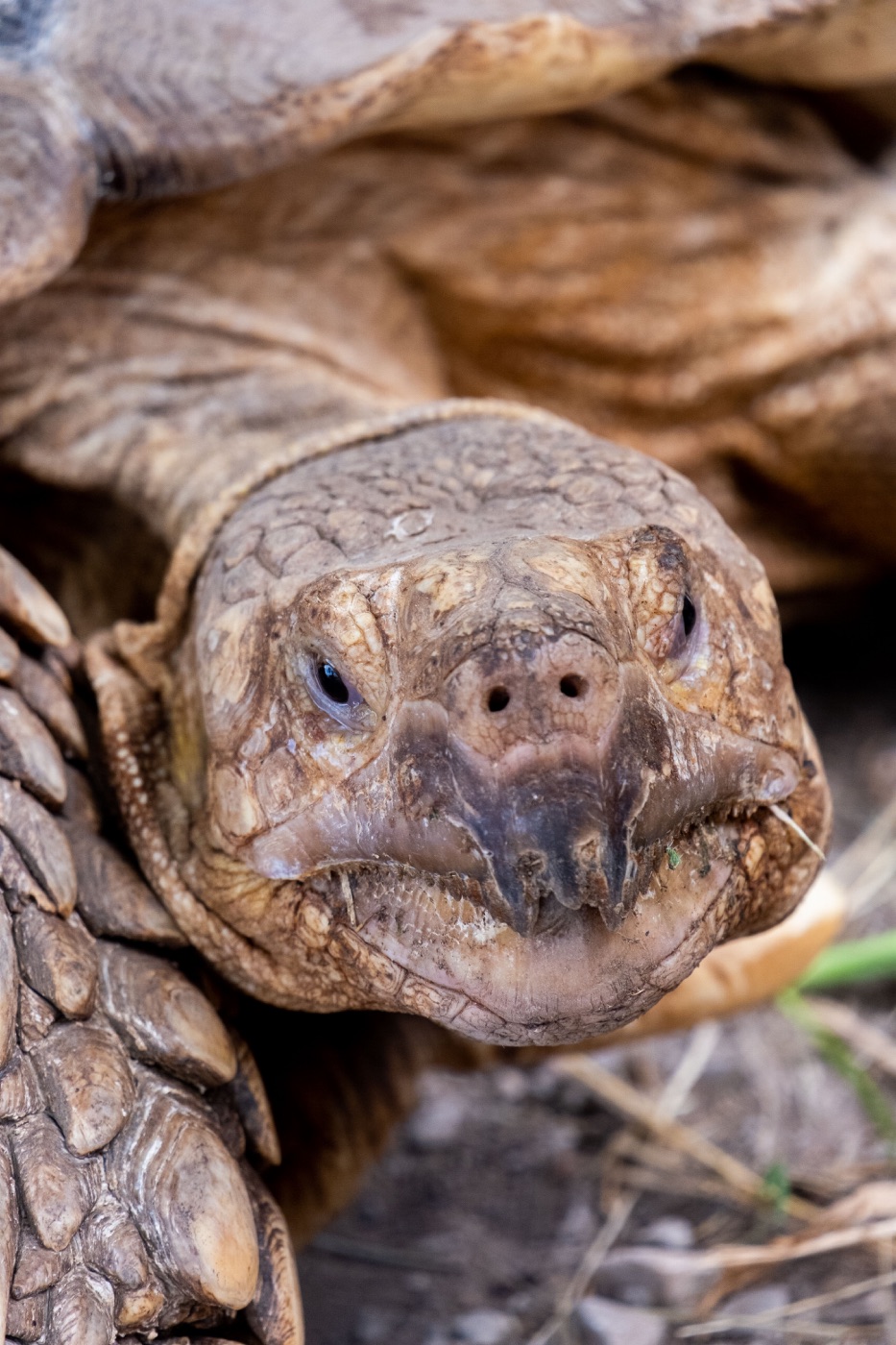
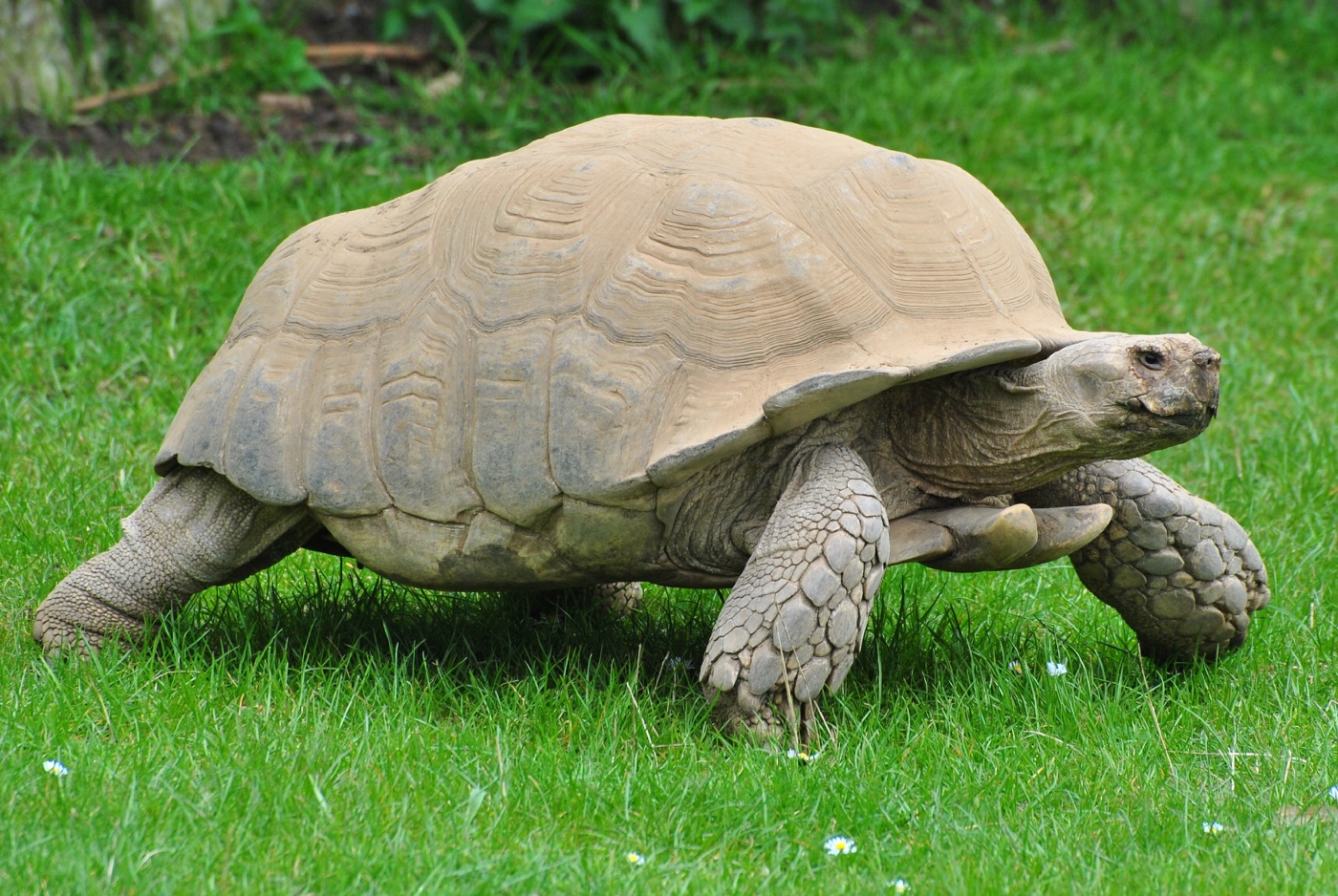
The Sulcata Tortoise (Centrochelys sulcata), also known as the African Spurred Tortoise, is one of the largest tortoise species in the world and the largest mainland tortoise species. Native to the southern edge of the Sahara Desert and the semi-arid grasslands, savannas and scrublands of the Sahel region in northern and sub-Saharan Africa, these impressive reptiles are known for their strong, heavily scaled legs, golden-brown shells and powerful digging abilities.
With shell length reaching typically 60-75cm (23.6–29.5”) inches with exceptionally large individuals reaching around 80cm or more and a weight of 45-80kg (88–132lbs) with some males exceeding 80kg, their enormous adult size, strength and long lifespan of about 50-80 years or even longer, makes them a serious, lifelong commitment. Although hatchlings are small and adorable, they grow into powerful tortoises that require extensive space, a carefully managed diet and suitable environmental conditions.
Enclosure size
Sulcata tortoises require spacious, secure enclosures that allow them to walk, explore, graze and dig naturally. Due to their rapid growth and enormous adult size, their housing requirements change significantly throughout their lives. Providing sufficient space is essential for their physical health and overall well-being.
Young Sulcata tortoises can be housed indoors in a large, well-ventilated enclosure that maintains appropriate temperatures and humidity.
Recommended Enclosure Sizes
Walls or fences must be deeply trenched at least 30-60cm (11.81–23.62”) into the ground because sulcatas are powerful diggers and with height of the fences around 60cm (23.62”). The fences also need to be strong and durable. Also always provide a large, heated indoor house or insulated hide because is mandatory for cool nights and winter weather.
Substrate
Choosing the right substrate is essential for the health and well-being of Sulcata tortoises. A suitable substrate should mimic their natural environment, allow digging and burrowing, provide comfortable walking surfaces, and help maintain appropriate humidity levels.
Although Sulcata tortoises originate from semi-arid regions of Africa, hatchlings and juveniles require access to humid environments to support healthy shell development and prevent dehydration.
Recommended Substrates
Organic Topsoil: Use fertilizer-free, pesticide-free soil without perlite or other additives. It provides a natural surface, supports digging, and retains moisture.
Coco Coir (Coconut Fiber): An excellent moisture-retaining substrate, particularly suitable for hatchlings and juveniles. It should be kept slightly moist rather than soaking wet.
Topsoil & Play Sand Mix: A mixture of approximately 70% organic topsoil and 30% washed play sand can create a more natural, stable substrate that supports digging.
Cypress Mulch: Can be used in suitable indoor enclosures to help retain humidity. Choose untreated mulch and monitor the tortoise to prevent accidental ingestion of large pieces.
Substrate Depth
Sulcata tortoises are natural diggers, so providing sufficient substrate depth is important.
Hatchlings/Juveniles: Approximately 8–10cm (3-4”)
Adults: Deep natural soil areas, around at 30-50cm (12-20”)
Substrates to Avoid
Avoid substrates that may cause injuries, digestive problems or difficulties maintaining appropriate humidity.
Calcium Sand: Can encourage ingestion and increase the risk of digestive impaction.
Pure Sand: Does not retain moisture effectively and may contribute to digestive problems if ingested.
Gravel & Small Stones: May be swallowed accidentally and cause intestinal obstruction.
Pine & Cedar Shavings: Contain aromatic compounds that may irritate the respiratory system.
Artificial Grass & Reptile Carpet: Do not allow natural digging and can be difficult to keep hygienic.
Health
Maintaining the health of a Sulcata requires proper nutrition, adequate hydration, suitable temperatures, UVB exposure and a clean, spacious environment. Although Sulcata tortoises are generally hardy reptiles, improper husbandry can lead to serious health problems, particularly during their early development.
Daily Cleaning
Remove Waste: Remove feces, uneaten food and visibly soiled substrate every day to prevent bacterial growth.
Clean Water Dish: Empty, wash and refill the water dish daily with fresh, clean water.
Bathing & Hydration
Young Sulcata tortoises benefit from regular shallow water soaking to support hydration and encourage normal bowel movements.
Use lukewarm water that is shallow enough for the tortoise to keep its head comfortably above the surface. Combine also with Haquoss T7 Shell Lotion designed for occasional external shell cleaning and care, available at Exotic Lives.
Shell Pyramiding
Shell pyramiding is a common growth abnormality in captive Sulcata tortoises. It occurs when the individual scutes (sections of the shell) grow upward, creating raised, pyramid-like shapes instead of the relatively smooth shell seen in healthy, naturally developing tortoises.
Although mild pyramiding does not always cause immediate health problems, severe cases may be associated with poor husbandry and other developmental issues. Once pyramiding has developed, the raised scutes cannot be reversed, making prevention especially important.
What Causes Shell Pyramiding?
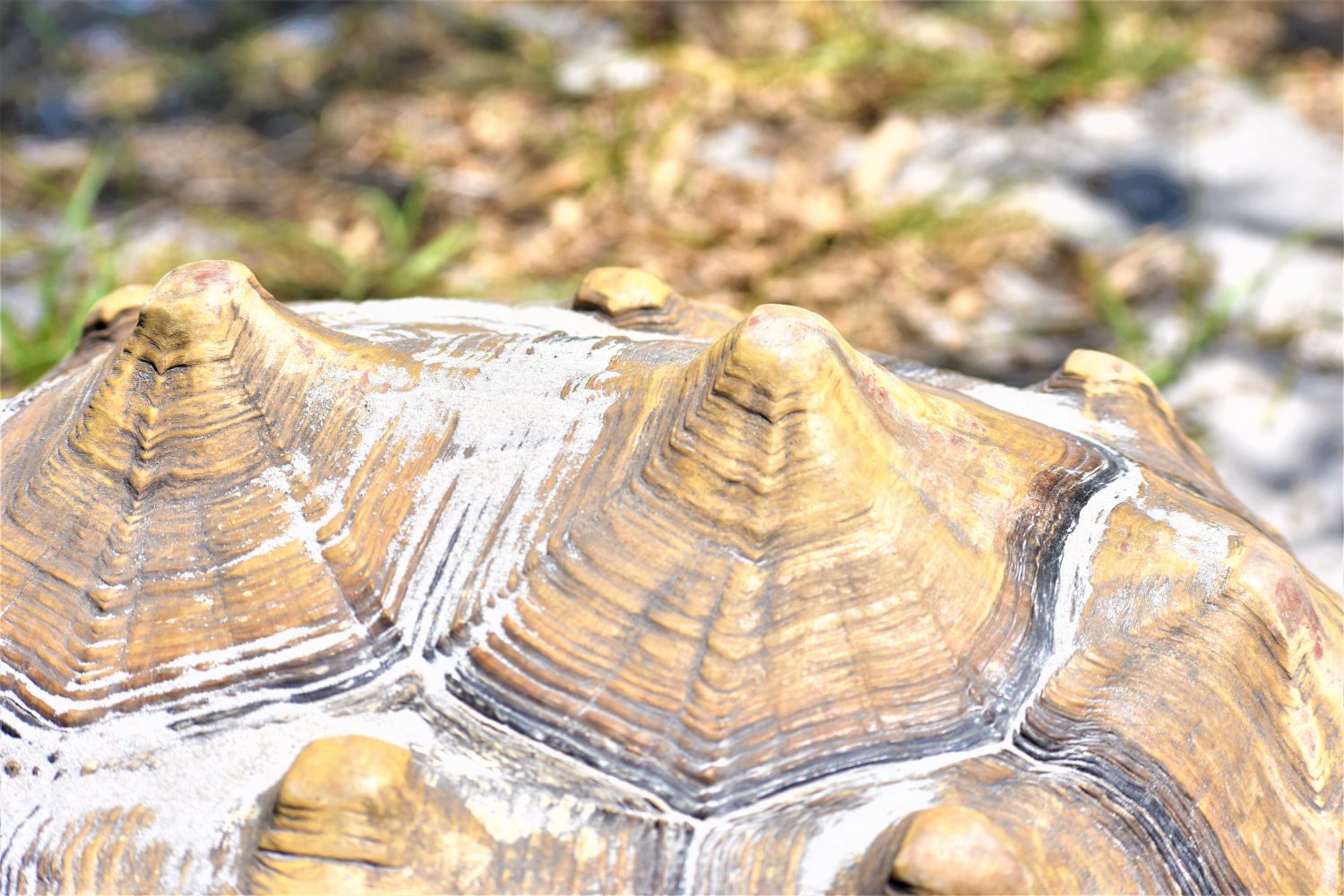
Pyramiding is a condition influenced by several environmental and nutritional factors.
Low Humidity: One of the most important contributing factors, particularly in hatchlings and juveniles. Excessively dry environments can interfere with normal shell growth.
Dehydration: No access to clean, drinking water may contribute to abnormal shell development.
Improper Diet: Diets containing excessive calories, too much protein or insufficient fiber may encourage unhealthy growth patterns.
Not enough UVB & Calcium: Insufficient UVB exposure and an unbalanced calcium can cause metabolic bone disease and abnormal shell development.
Poor Environmental Conditions: Inappropriate temperatures, inadequate space and unsuitable husbandry can negatively affect overall development.
How to Prevent Shell Pyramiding
Preventing pyramiding begins at an early age, when Sulcata tortoises experience significant shell growth.
1. Appropriate Humidity
Hatchlings and young Sulcatas benefit from relatively high ambient humidity, commonly around 70–80%, with access to a warm, humid hiding area. Avoid cold and constantly wet conditions, which can cause other health problems.
2. Proper Hydration
Always provide fresh drinking water. Young tortoises should receive regular supervised shallow-water soaks to support hydration.
3. Natural, High-Fiber Diet
Offer a diet primarily consisting of suitable grasses, grass hay and safe weeds. Avoid excessive fruit, animal protein, and calorie-dense foods that may promote inappropriate growth.
4. Proper UVB & Calcium
Provide access to appropriate UVB lighting or safe, unfiltered natural sunlight, alongside a balanced calcium-rich diet. This supports normal bone and shell mineralization.
6. Suitable Temperatures
Provide an appropriate temperature gradient, including a warm basking area. Proper heating supports digestion, metabolism, and healthy development.
Cohabitation
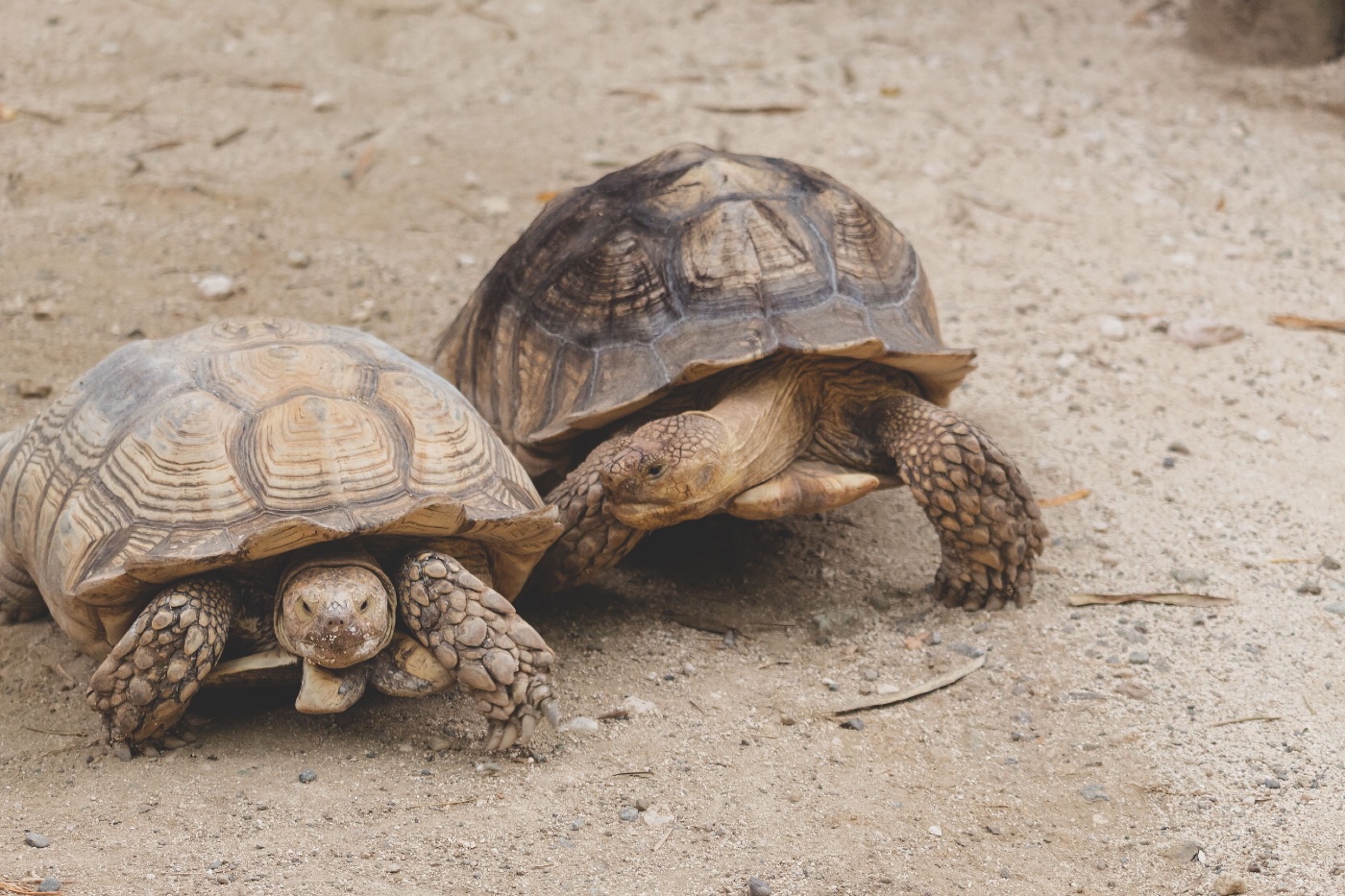
Housing multiple Sulcata tortoises together is generally not recommended, particularly in smaller enclosures. As they mature, territorial and reproductive behaviors can lead to aggression, stress and injuries. They do not become lonely when housed alone and keeping a single tortoise in a spacious, properly equipped enclosure is generally the safest and most responsible option.
Can Cohabitation Ever Work?
Experienced keepers may successfully maintain multiple Sulcata tortoises in extremely large outdoor enclosures with plenty of space, multiple feeding stations, shelters and visual barriers. However, compatibility is never guaranteed and tortoises must be closely monitored. Separate, fully equipped enclosures should always be available if aggression or stress develops.
Temperature
Sulcata tortoises originate from warm regions and require consistently warm temperatures to remain healthy. As cold-blooded reptiles, they depend on external heat sources to regulate their body temperature, digest food and maintain normal activity levels.
Providing a proper temperature gradient allows the tortoise to move between warmer and cooler areas depending on its needs.
Recommended Temperatures
Basking Area: 35–40°C (95–104°F).
Warm Side: 29–32°C (84–90°F).
Cool Side: 24–27°C (75–80.6°F).
Nighttime Temperature (Hatchlings & Juveniles): 26–28°C (79–82°F).
Nighttime Temperature (Adults): 21–24°C (70–75°F)
Heating Equipment
Basking Lamps: Provide a concentrated heat source that allows the tortoise to warm its body naturally. Choose a halogen flood heat lamp or a basking floodlight lamp from 65w to 100w. Position the lamp over one side of the enclosure to create a temperature gradient.
Ceramic Heat Emitters: Produce heat without visible light, making them suitable for maintaining nighttime temperatures when necessary. Choose between a 75w to 150w.
Radiant Heat Panels: Can be useful for heating insulated outdoor shelters, particularly for adult Sulcata tortoises.
Keep in mind that all suitable heating equipment should be connected to an appropriate thermostat to prevent overheating and maintain stable temperatures like our Dimming & Pulse Exo Terra Thermostat that we can provide you here at Exotic Lives.
Also, if your tortoise has an outdoor enclosure, they must have access to a warm, dry, insulated shelter when temperatures become too low.
Important: Sulcata tortoises do not hibernate. Long exposure to cold temperatures can cause serious health problems, including respiratory infections. Hatchlings and juveniles are very sensitive to cold conditions and should be kept consistently warm.
Humidity
Although Sulcata tortoises originate from the regions, humidity plays an important role in their health, especially during their early development. In the wild, young Sulcatas spend much of their time in underground burrows, where humidity levels are significantly higher than at the surface.
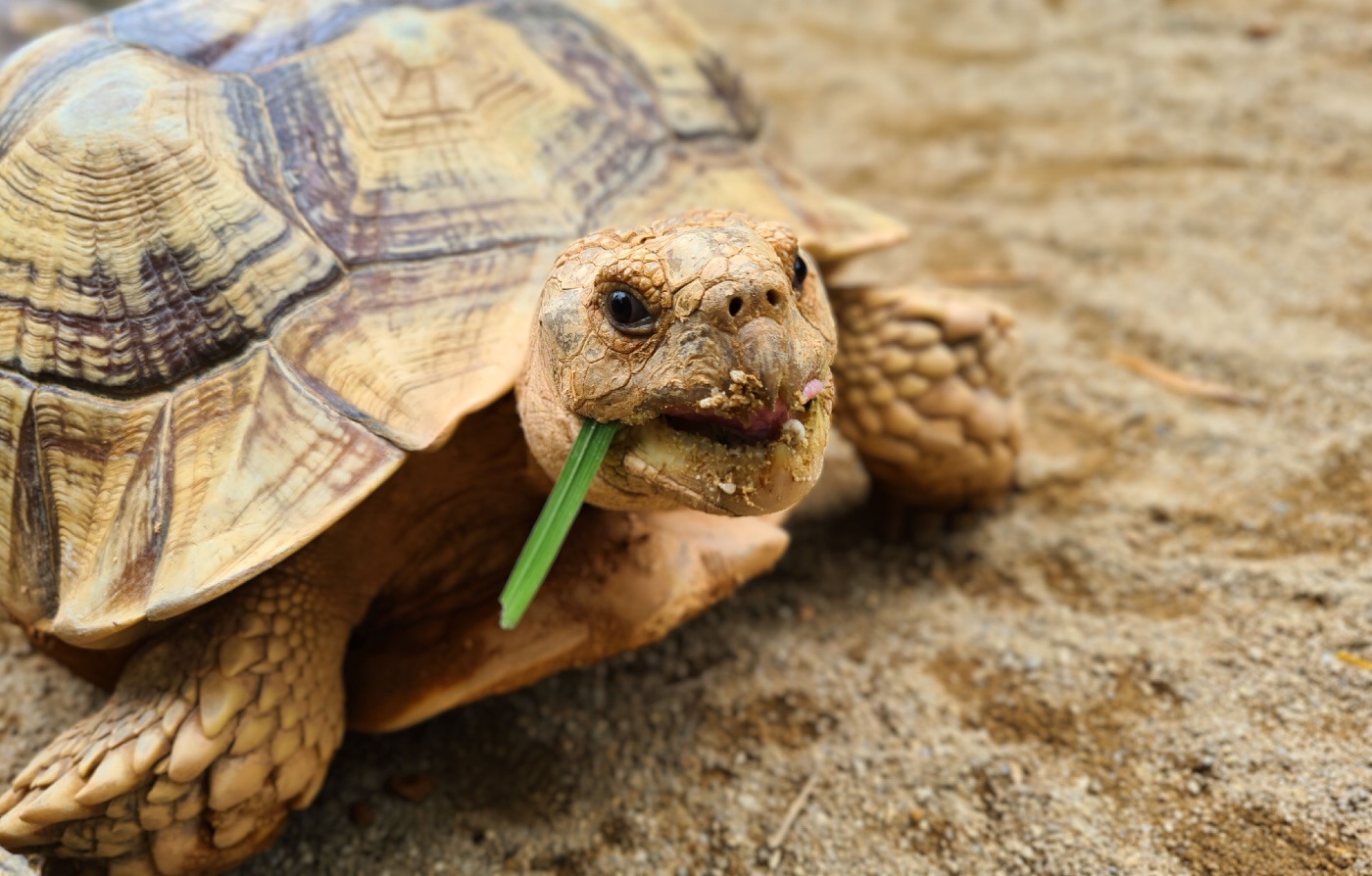
Maintaining appropriate humidity helps prevent dehydration, supports healthy shell growth and reduces the risk of shell pyramiding.
Recommended Humidity Levels
To help retain high humidity, providing a Humid Hide is particularly beneficial for hatchlings and juveniles. It provides a sheltered area with higher humidity where the tortoise can rest comfortably. Also is important to lightly mist the substrate when necessary to maintain appropriate humidity but avoid excessive spraying that leaves the enclosure constantly wet.
Adult Sulcata tortoises living outdoors generally do not require the same high ambient humidity levels as hatchlings. However, natural soil and properly maintained burrows can provide more humid microclimates, which are beneficial for them.
Lighting
Proper lighting is essential for the health and development of Sulcata tortoises. In their natural habitat, these tortoises are exposed to strong sunlight, which provides both visible light and ultraviolet (UV) radiation.
UVB
UVB exposure allows Sulcata tortoises to produce vitamin D3, which is necessary for calcium absorption and healthy bone and shell development. Without proper UVB, tortoises can develop serious health problems, including Metabolic Bone Disease. These tortoises are primarily active during the day and require relatively strong UVB exposure. The appropriate UVB lamp strength depends on the distance between the lamp and the tortoise, the presence of a reflector and whether the light passes through mesh.
Recommended UVB Equipment
Linear T5 UVB lamps are generally recommended because they provide a wider and more consistent area of UVB exposure compared with compact UVB bulbs. For Sulcata tortoises the Arcadia ProT5 12% UVB Kit is a suitable option when installed at the correct distance.
UVB lamps must be installed according to the manufacturer's instructions. Replace UVB lamps according to the manufacturer's recommendations
LED Lighting
Full-spectrum daylight lamp can improve overall enclosure brightness and support a natural day/night cycle, but ordinary LED do not replace a UVB lamp.
A bright, well-lit enclosure encourages natural daytime activity and supports the tortoise's overall well-being.
Lighting Duration
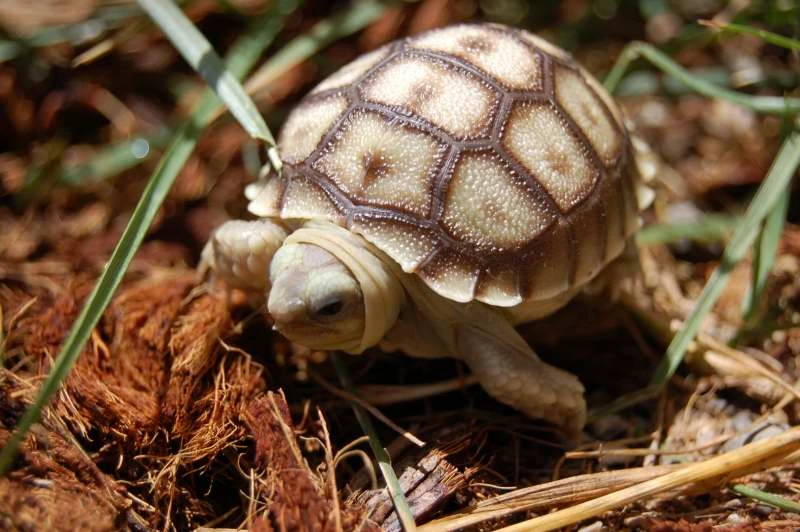
Approximately 12–14 hours per day, adjusted seasonally to maintain a natural day/night cycle. Keep in mind that all visible lighting and UVB lamps should be switched off to provide a proper period of darkness.
Lighting Placement
Position the UVB lamp and basking lamp so their effective areas overlap, allowing the tortoise to receive heat and UVB simultaneously.
Outdoors
Sulcata tortoises housed outdoors generally do not require additional artificial UVB lighting when they receive sufficient direct natural sunlight. However, during extended periods indoors, particularly in winter, appropriate artificial UVB lighting will be necessary.
Diet
Sulcatas are herbivorous reptiles that naturally feed on grasses, weeds and other vegetations. Their digestive systems are adapted to a diet that is high in fiber, low in protein and low in sugar.
Providing a balanced diet is essential for healthy growth, proper digestion, strong bones and shell development. An inappropriate diet can contribute to obesity, digestive problems and abnormal growth.
Recommended Diet
Grasses & Hay (Main Diet-Approximately 70–90%)
Bermuda grass
Timothy hay
Orchard grass
Meadow hay
Fresh, pesticide-free lawn grass
Other safe, untreated pasture grasses
Fresh grasses are particularly beneficial for young Sulcatas, while hay becomes increasingly important as they grow. Hay can be lightly moistened to make it easier for younger tortoises to eat.
Leafy Greens & Weeds (Approximately 10–30%)
Dandelion leaves and flowers
Plantain weeds
Endive
Escarole
Chicory
Hibiscus leaves and flowers
Mulberry leaves
Prickly pear cactus pads (spines removed)
Grape leaves
Offering a variety of suitable plants helps provide different nutrients and encourages natural feeding behavior.
All of the above greens/weeds must always be untreated and pesticide-free.
Foods to Avoid
Fruit: Generally avoid fruit because of its high sugar content, which is unsuitable for their grass-adapted digestive system.
Animal Protein: Never feed meat, insects, dog food or cat food.
High-Protein Vegetables: Avoid peas, beans and other protein-rich foods.
Iceberg Lettuce: Contains very little nutritional value and should not be a regular food source.
Spinach: High in oxalates, which can interfere with calcium availability when fed excessively.
Bread, Pasta & Processed Foods: Completely unsuitable for tortoises.
Toxic Plants: Never offer unidentified plants or vegetation treated with pesticides, herbicides or fertilizers.
Feeding Schedule/Quantity
Hatchlings/Juveniles
Adults
Calcium & Supplements
Calcium is essential for healthy bone and shell development, particularly in growing Sulcata tortoises.
Calcium without D3: Use daily for hatchlings, 3 to 4 times a week for juveniles and 2 to 3 a week for adults, like the Haquoss Repti Calcium Ultra that we can provide you with.
Calcium with D3: Use calcium with D3 only if the tortoise lacks of UVB exposure or is kept indoors without a proper ultraviolet light source, about 1 to 2 times a week.
Multivitamin supplements can help address nutritional gaps when a tortoise's diet lacks sufficient variety. However, Sulcata tortoises receiving a balanced diet of grasses, hay and safe weeds may not require regular multivitamin supplementation.
Supplement requirements vary depending on the tortoise's age, diet, UVB exposure and health. Avoid excessive supplementation.
Caring for a Sulcata tortoise is a continuous learning experience. Understanding their natural behaviors, recognizing early signs of health problems and adapting their environment as they grow are key to providing the best possible care. Every small improvement in their daily routine can make a significant difference to their long-term health and well-being.
At Exotic Lives, we are passionate about promoting responsible reptile keeping and animal welfare. Whether you're preparing for your first Sulcata tortoise or improving an existing enclosure, we offer a range of quality reptile supplies, lighting, heating equipment, substrates and supplements to help you create a suitable environment for your tortoise.
Explore our products at Exotic Lives and give your tortoise the care it deserves!