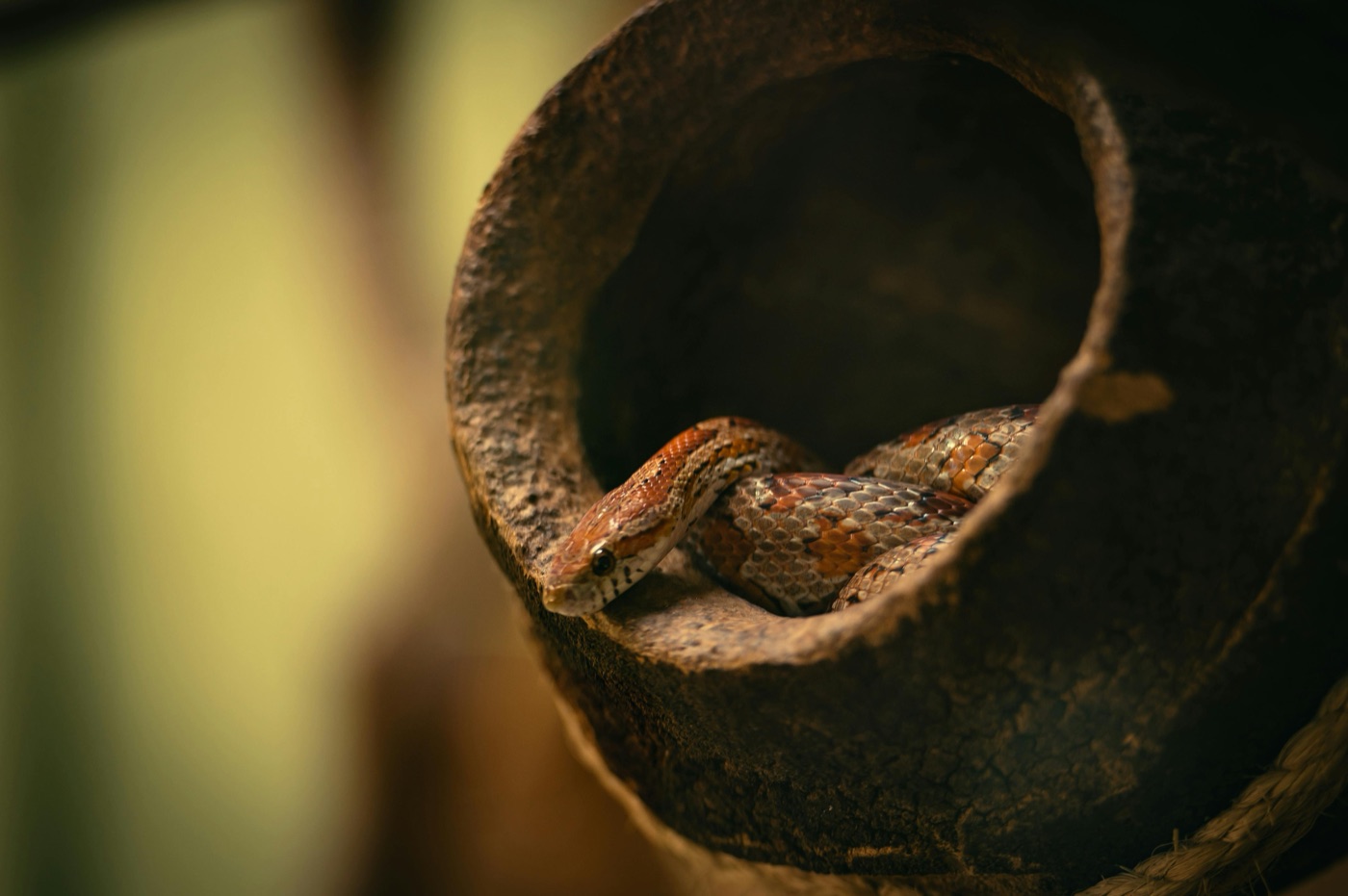
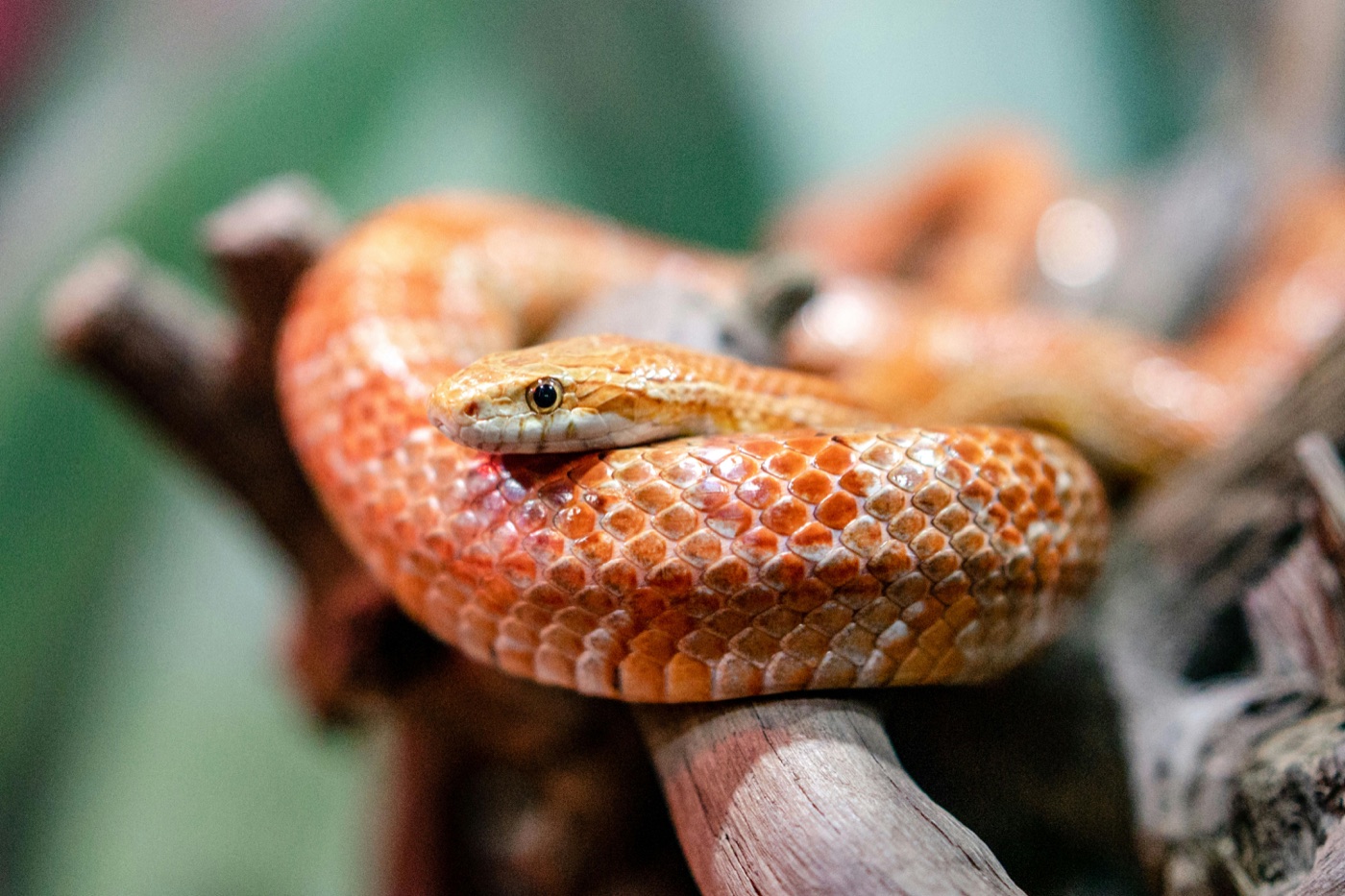
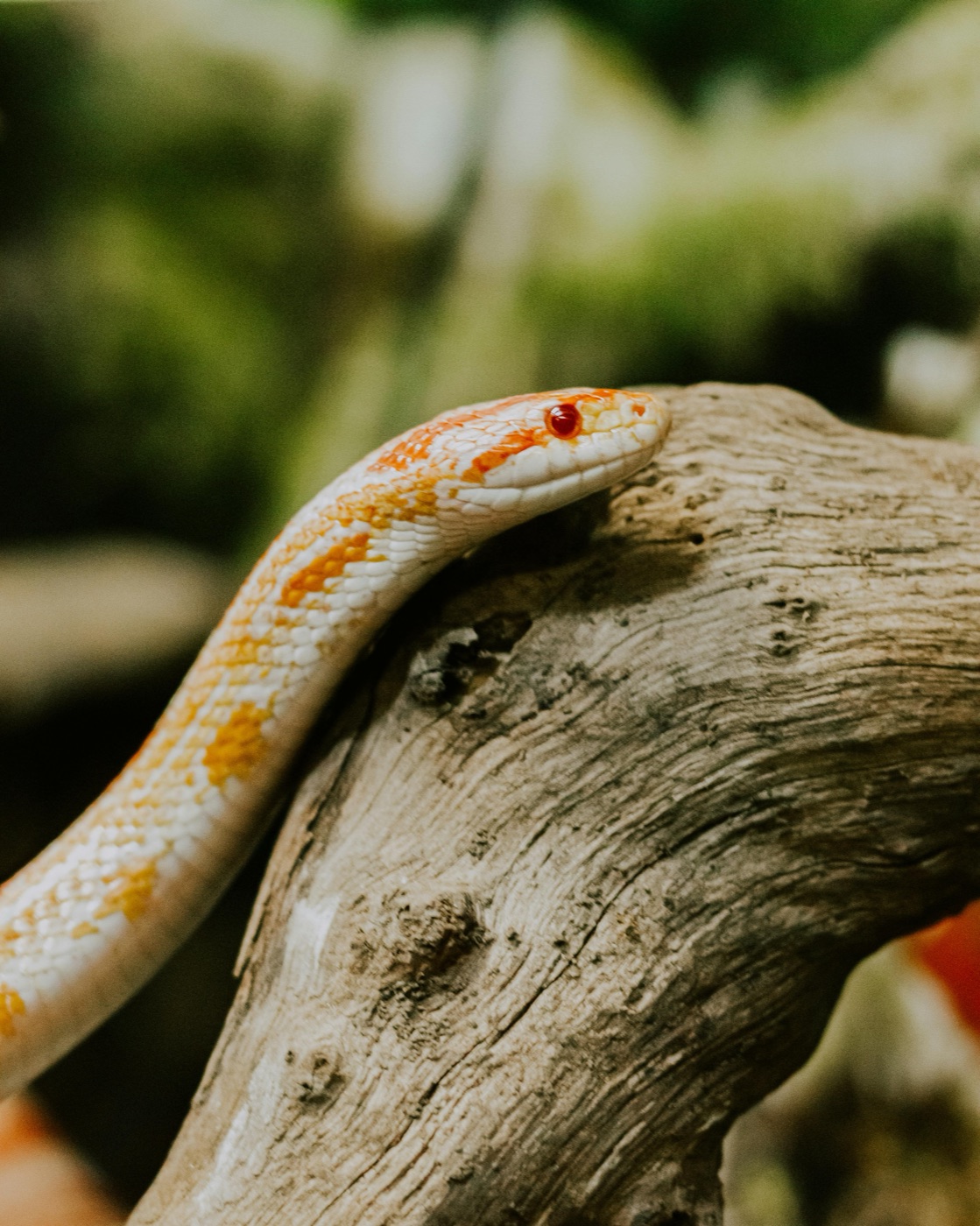
Corn snakes (Pantherophis guttatus) are one of the best beginner snakes due to their calm temperament, simple care needs, and wide variety of beautiful color morphs. They are native to the southeastern United States, where they live in forests, grasslands, and abandoned buildings, often hiding under logs or inside burrows.
This species are mostly nocturnal to crepuscular, meaning they are active during the evening and early morning hours. They are semi arboreal, so while they spend a lot of time on the ground, they also enjoy climbing when given the opportunity.
In the wild, corn snakes are carnivores that feed on small rodents and occasionally birds. We will go into more detail about their diet later in this guide.
With proper care, corn snakes typically live between 15 to 20 years in captivity. Adult corn snakes usually reach a length of around 60–180 cm(24–72 inches), depending on genetics and sex.
Enclosure Size
Providing enough space is important for both the physical and mental well being of your corn snake.
Hatchlings: A 10–20 gallon enclosure (approximately 50×30×30cm/20×12×12 inches)
Juveniles: Around 40 gallons (approximately 90×45×45cm/36×18×18 inches)
Adults: Ideally around 120×60×60cm(48×24×24 inches)
Since corn snakes like to explore and climb, adding branches and enrichment is highly recommended.
Temperature
Corn snakes need a proper temperature gradient to regulate their body heat.
Warm side: 28–32°C (82–90°F)
Cool side: 21–24°C (70–75°F)
Night temperature drop: 18–24°C (64–75°F)
Always provide a warm hide and a cool hide so the snake can choose where it feels most comfortable.
Humidity Levels
This snakes require moderate humidity, similar to what they would experience in their natural habitat.
The Ideal humidity is 40–60% and during shedding slightly higher humidity can help.
You can also provide a humid hide to assist with proper shedding if needed.
Lighting
Corn snakes do not require UVB lighting to survive, but it can still be beneficial optional a low-level UVB lighting (2–5%). Maintain a regular day/night cycle (12 hours light / 12 hours dark) and avoid excessive brightness or heat from lighting. Diet and Feeding Corn snakes are carnivores and mainly eat rodents.
Diet
Typical diet: Pinky mice (for hatchlings) Fuzzy mice (for juveniles) Adult mice (for fully grown snakes)
Feeding schedule
Prey should always be appropriately sized (about the same width as the snake’s thickest part). Frozen thawed rodents are recommended for safety and convenience and fresh water should always be available in a clean bowl.
Corn snakes are hardy, low maintenance reptiles that make excellent pets for beginners and experienced keepers alike. With the right enclosure, proper temperatures, correct humidity and a consistent feeding routine, they can thrive in captivity for many years. Their calm nature and ease of handling make them one of the most popular pet snakes in the world.